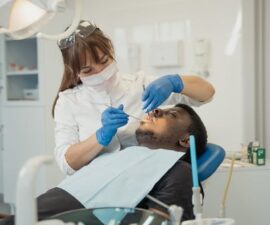
You bite into something crunchy, feel a sharp little zing, and then it is gone. A few days later it happens again. Or maybe you run your tongue along a back tooth and notice an edge that was never there before. Either way, the same question tends to follow: can a cracked tooth be saved, or is it on its way out?
The encouraging answer is that a great many cracked teeth can be saved, especially when they are looked at early. The harder answer is that some cannot, and the difference usually comes down to where the crack is, how deep it runs, and how long it has been left alone. This guide walks through the kinds of cracks dentists see, the signs worth paying attention to, the repairs that are available, and the situations where removing the tooth becomes the kinder option.
Why a Cracked Tooth Behaves Differently From a Broken Bone
When you break an arm, the body sends cells to the area and knits the bone back together. Teeth have no equivalent process. The hard outer enamel and the dentin beneath it have no way to grow back across a crack, so once a fracture forms, it stays. At best it holds steady. More often, everyday chewing slowly pushes it a little further.
That is why dentists treat cracks as something to manage promptly. Each time you bite down, the two sides of a cracked tooth can flex apart very slightly and then snap back together. Over weeks and months, that motion can extend the crack deeper toward the nerve or down toward the root, and the deeper it goes, the fewer repair options remain.
The good news hidden in this is that timing is largely in your hands. A crack caught while it is still shallow can often be stabilized with a fairly simple repair. The same crack, left for a year of chewing, may end up needing a root canal, a crown, or removal.
The Five Kinds of Tooth Cracks Dentists Talk About
Dentists tend to sort cracks into a handful of familiar categories, and knowing them makes a dental visit much easier to follow. The first is the craze line: a tiny surface line in the enamel, very common in adult teeth, especially front teeth. Craze lines usually cause no pain and often need no treatment at all beyond keeping an eye on them, though some people choose cosmetic work if the lines are visible and bother them.
Next comes the fractured cusp. The cusps are the pointed ridges on the chewing surface of a back tooth, and one can break off, often around a large filling. Because the break usually stays away from the nerve, this kind of fracture tends to be very fixable, typically with a new filling or a crown. Then there is the classic cracked tooth, where a crack starts at the chewing surface and runs down toward the root. Whether this tooth can be saved depends heavily on how far down the crack has traveled.
The last two are the most serious. A split tooth is a cracked tooth that has progressed until the tooth separates into distinct pieces. A vertical root fracture starts in the root itself and works upward, and it often shows few symptoms until the surrounding bone and gum become infected. These two categories are where the conversation about extraction most often begins.
Signs Your Tooth Might Be Cracked
Cracked teeth can be surprisingly sneaky. Many do not show up clearly on an X-ray, and the pain can come and go, which leads people to wait and see. The most classic sign is a sharp pain when you bite down, particularly pain that flashes when you release the bite. That release pain comes from the crack closing back up after it flexed open.
Other common signs include sensitivity to hot or cold that fades quickly, sensitivity to sweet foods, discomfort that is hard to pin to one particular tooth, and swelling of the gum around a single tooth. Some people notice they have started chewing only on one side without really deciding to. That habit is worth noticing, because it is often the body quietly protecting a sore spot.
Pain that becomes constant, throbs on its own, or keeps you up at night usually means the crack has reached the pulp, which is the soft inner tissue holding the tooth’s nerve and blood supply. Swelling, a pimple-like bump on the gum, or a bad taste can point toward infection. Any of these are good reasons to see a dentist soon rather than waiting for a routine appointment.
How Dentists Find a Crack That Hides
Because cracks are hard to see, diagnosis often involves several small tests. Your dentist will usually start by asking where it hurts, what triggers it, and how long it has been going on. A careful look with magnification can reveal lines that are invisible to the naked eye, and a dental dye can make a crack stand out more clearly.
A bite test is one of the most useful tools. You bite on a small instrument placed over one cusp at a time, which helps pinpoint exactly which part of which tooth is cracked. Dentists may also run a probe along the gumline to check for a narrow, deep pocket next to the tooth, which can be a sign that a crack has extended below the gum. X-rays help rule out other causes of pain and can show bone changes around a root fracture, even when the crack itself does not appear.
None of this is particularly uncomfortable, and it matters a lot for the result. The treatment plan depends entirely on mapping the crack accurately, so a few extra minutes of testing can be what separates a simple repair from a more involved one.
Repairs That Can Save a Cracked Tooth
For shallow cracks and chipped edges, dental bonding is often the first option. The dentist applies a tooth-colored resin, shapes it, and hardens it with a curing light. Bonding works well for small cracks in front teeth and for minor chips, and it can usually be done in a single visit. It also has limits: bonding does little to hold together a tooth that flexes under heavy chewing forces.
For a cracked back tooth, a crown is the most common way to save it. A crown covers the whole visible part of the tooth and holds the cracked pieces together so they stop flexing every time you chew. Think of it like a snug cap that keeps the tooth from being pried apart. When a crack is caught before it reaches the pulp, a crown alone can often keep the tooth comfortable and working for many years.
If the crack has already reached the pulp and the nerve is inflamed or infected, a root canal usually comes first. The dentist removes the damaged inner tissue, cleans and seals the canals, and then places a crown to protect what remains. Many people hear the phrase root canal and feel a jolt of dread, but in the context of a cracked tooth it is often the very treatment that lets you keep it.
When a Cracked Front Tooth Is Mostly About Appearance
Cracks and chips in front teeth come with an extra layer of worry because they show when you smile and talk. Fortunately, front teeth take far less chewing force than molars do, so the structural risk is often lower and the repair can focus on restoring the look and shape of the tooth.
Small chips and craze lines are frequently handled with bonding. For larger chips, several damaged front teeth, or someone who wants a more even, longer-lasting result, porcelain veneers are a common choice. A veneer is a thin shell of tooth-colored porcelain bonded to the front surface of the tooth. Dental practices that offer veneers at a Bronx dental office describe them as a way to correct chipped teeth and to restore teeth that have lost part of their structure through an accident or other trauma, with each veneer custom-made and color-matched to the rest of the smile.
The important caveat is that a veneer covers the front of a tooth. If a crack runs deep or the tooth is weak overall, a crown may be the better fit. Your dentist will look at how much healthy tooth remains before recommending one or the other, and it is completely reasonable to ask why they chose the option they did.
When Saving the Tooth Is No Longer Realistic
Some cracks simply go too far. The clearest example is a crack that runs vertically down below the gumline and into the root. A crown can hold together the part of the tooth above the gum, but it cannot reach a fracture in the root, and bacteria can travel along that crack into the bone. Once that happens, the tooth tends to keep causing infection no matter how it is restored.
Split teeth are another common case. When a tooth has separated into two pieces, a dentist will sometimes be able to remove the smaller piece and save the rest, depending on where the split lies. When the split runs through the middle of the tooth and down into the root, saving it is rarely possible. Vertical root fractures, likewise, usually end in extraction because there is no reliable way to seal a crack running up the length of a root.
This is also how dental offices describe it on their own service pages. One tooth extraction dentist in the Bronx explains that a fractured tooth needs prompt treatment because it does not heal on its own, that many fractures can be repaired with bonding or a crown, and that an extensive vertical fracture extending down to the root is the point where the tooth becomes unsalvageable and is taken out. That sequence, repair first and extraction when the root is involved, is a good summary of how most dentists approach the decision.
Questions Worth Asking Before You Decide
If a dentist tells you a cracked tooth may need to come out, it helps to understand the reasoning before you agree. A good first question is simply where the crack ends. If it stops above the gumline, there may still be a path to saving the tooth. If it extends into the root, ask what the dentist saw that told them so, whether that was a deep narrow pocket, bone changes on the X-ray, or a crack visible after removing an old filling.
It is also fair to ask about the long-term outlook of each option. A tooth that can technically be saved with a root canal and crown may still carry a guarded outlook if the crack is close to the root. Some people prefer to try saving the tooth anyway, while others would rather go straight to extraction and a replacement. Neither choice is wrong, and a thoughtful dentist will help you weigh them against your own priorities, budget, and comfort level.
A second opinion is always an option for a decision like this, and many dentists encourage it. Whether you see a family dentist in Niagara or a dentist in the Bronx, NY, the core questions are the same: where does the crack go, what are the realistic options, and what happens if you wait.
What Happens If You Leave a Cracked Tooth Alone
It is tempting to ignore a crack that only hurts once in a while. The problem is that the crack keeps responding to chewing even when it is not hurting. Each bite can extend it a little, and the pain often fades for a while because the nerve becomes less responsive, which feels like improvement even when the crack is growing.
Eventually, a crack that reaches the pulp can let bacteria in, leading to inflammation and infection. An infected tooth can form an abscess, which brings swelling, throbbing pain, and sometimes fever. At that stage, the options narrow to root canal treatment or extraction, and the infection needs care either way. A crack that keeps growing can also split the tooth outright, sometimes during an ordinary meal.
None of this means every crack is an emergency. Craze lines can be left alone for years. The point is that a crack that causes symptoms deserves a dental visit sooner rather than later, because the window for a simple repair tends to close gradually and quietly.
Looking After a Cracked Tooth Until Your Appointment
If you suspect a crack and are waiting to see a dentist, a few simple habits can help protect the tooth. Chew on the other side of your mouth as much as you comfortably can, and avoid very hard foods such as nuts, hard candy, ice, and crusty bread. Sticky foods like caramel can also tug at a cracked tooth, so it is wise to skip them for now.
Very hot and very cold drinks may set off sensitivity, so lukewarm is often more comfortable. Rinsing gently with warm salt water can help keep the area clean if the gum feels tender. Over-the-counter pain relievers used as the label directs can take the edge off, and a cold compress on the outside of the cheek may help with any swelling.
If a piece of the tooth has broken off, save it if you can and bring it along. If the edge is sharp and catching your tongue or cheek, dental wax from a pharmacy can cover it temporarily. Swelling that spreads, fever, or difficulty swallowing are reasons to seek care right away.
Replacing a Tooth That Has to Come Out
When a cracked tooth does need to be removed, it helps to think about the space it leaves behind. Neighboring teeth can slowly drift toward a gap over time, and the opposite tooth can shift too, which can change your bite. For a tooth that was important for chewing or that shows when you smile, most dentists will talk with you about replacement options early in the process.
The main choices are a dental implant, a fixed bridge, or a removable partial denture. An implant places a post in the jawbone to support a crown, and it leaves the neighboring teeth untouched. A bridge holds a false tooth in place using the teeth on either side of the gap as anchors. A partial denture is removable and can replace one or several teeth. Each has its own trade-offs in time, cost, and upkeep, and your dentist will check your gums, bone, and nearby teeth before suggesting one.
Planning the replacement before the extraction can make the whole process smoother. In some cases it affects how the tooth is removed or whether bone is preserved at the site, so it is worth bringing up at the first appointment rather than after the fact.
Why Teeth Crack in the First Place
Some cracks come from a single moment: biting down on an olive pit, a popcorn kernel, or a fork. Others build up over years. Teeth with large fillings are more prone to cracking because the filling leaves less natural tooth to absorb chewing forces, and the remaining walls of the tooth can weaken over time.
Grinding and clenching are major contributors. Many people grind at night without knowing it, or clench during stressful stretches of the day, and that constant force can create and deepen cracks. Chewing ice, opening packages with your teeth, and biting fingernails or pens all add up. Sudden temperature changes, such as hot coffee followed by ice water, may also play a part for some people.
Age is a factor as well. Teeth that have done decades of chewing simply carry more wear, and cracks become more common in adults over time. None of this is a reason for alarm; it simply explains why a dentist may look closely at a tooth with a big old filling or signs of grinding during a routine check.
Habits That Help Prevent the Next Crack
If you grind or clench, a custom night guard is one of the most effective ways to protect your teeth. It spreads the force of grinding across a cushioned surface so no single tooth takes the full load. Your dentist can usually spot signs of grinding, such as flattened or worn edges, even if you have never noticed the habit yourself.
Everyday choices matter too. Retire ice chewing, keep hard candy to a minimum, and use scissors rather than teeth to open packages. If you play contact sports or take part in activities with a risk of a fall or a knock to the face, a mouth guard is an easy safeguard. And if you know you have large older fillings, ask your dentist at your next checkup whether any of those teeth might benefit from a crown before a crack has the chance to form.
Regular checkups give your dentist a chance to catch small cracks and worn fillings before they cause pain. A crack spotted early is usually the easiest kind to fix, and it gives you the widest choice of options.
The Short Answer for Most Cracked Teeth
So, can a cracked tooth be saved? Very often, yes. Craze lines may need nothing at all, fractured cusps and shallow cracks are commonly repaired with bonding or a crown, and cracks that reach the nerve can frequently be treated with a root canal followed by a crown. Front teeth with chips or visible damage have cosmetic options too, from bonding to veneers.
The teeth that usually cannot be saved are those where the crack has run deep into the root or the tooth has split through its center. In those cases, removing the tooth and planning a replacement tends to give a more comfortable and predictable result than trying to hold onto it.
The single most useful step is the simplest: if a tooth hurts when you bite or release, or something about it feels different, book a dental visit while the crack is still small. Early attention keeps more doors open, and it often means a quicker, simpler repair that lets you get back to eating, talking, and singing without giving that tooth a second thought.